Beverage Adventures
Executive Brief: I had to empty my liquor cabinet due to a recent move (2025-12), and then I finally (2026-04) got around to making the hour-plus drive over to a warehouse that has a reasonably good range of choices… which brought me to feeling a whim about writing down some of my experiences with various beverages. This page will grow over time, no doubt in fits and starts, as it will be a continual (and variably messy) work in progress. Since you can search this material, I am not going to bother with categorization and organization. (Much. (Yet.))
Introduction
I like to experiment with beverage flavors, not all of them alcoholic in nature, mixing this and that. On occasion, I come up with cocktail recipes worthy of bestowing a name (and a repeat performance).
Note well: I have some inherent preferences and revulsions related to my Unmasked Palate (detailed below), so your mileage will no doubt vary.
I don’t drink alcohol for the effects; fortunately, that’s not a craving that I experience, which is a relief because substance use disorders (and related disinhibitions) run in my family (with wild abandon).
I am also affected by particular sensitivities that influence my experience of alcohol flavors. I am substantially affected as follows:
- I am revolted by the “bandaid” olfaction associated with Brettanomyces yeast (aka Brett), peat, (chloro)phenols, and so on.
- I am a bitter supertaster.
- The Coriander sativum plant tastes like soap (whether the parts are called coriander, coriander seeds, or cilantro).
- I have a cavernous haemangioma in my oral tract that is painfully sensitive to the burn of alcohol and spices.
- I was exposed to the flavor of bourbon very early in childhood in the form of bourbon balls (made for holidays), and discussing that history meant that I had to create an entire recipe section for this book… whose content elaboration is ongoing.
All in all, I am much more likely to enjoy bourbon and brandy, and only appreciate a much narrower range of whiskey. Smoked alcohols (like peated scotches and mezcal) are right out because the bandaid smell and taste just ruins them for me.
So let’s get on to looking at specific items…
Utopias - 2025
Samuel Adams
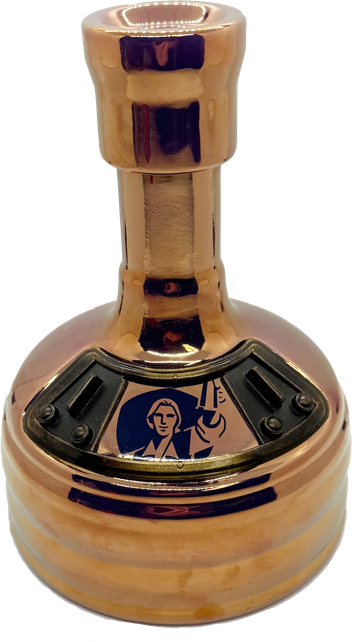
ABV 30%. A 750ml ceramic bottle was almost $300.
This is a beer, specifically a blend of beers (made with VT maple syrup) aged in various kinds of barrels, including some 30-year-old bourbon casks. Some of the older ones in their collection are ruby port, Carcavelos (a type of port), and cognac (a type of brandy). Later, they added scotch barrels to their library. And in this most recent vintage they added beer aged in barrels used for Irish whiskey (so not peated), Amarone (a dry red wine made from dried grapes), and white port. So there should, in theory, be flavors of vanilla (vanillin from oak), caramel (from burnt casks), spice, fruit, and on and on and on… essentially all of the identifiers that you tend to see in various descriptions of wines and spirits. There would also be a risk of smoke and bandaids, but I didn’t notice anything substantial.
All in all, the raisin flavor is very prominent; frankly, this is much like a tawny port in flavor, albeit it pours a viscous, dark burgundy with an amber edge. Not that I’m suggesting that you could safely refill the bottle with an imposter.
BS Burnt Sugar Whiskey
Bubba’s Secret Stills
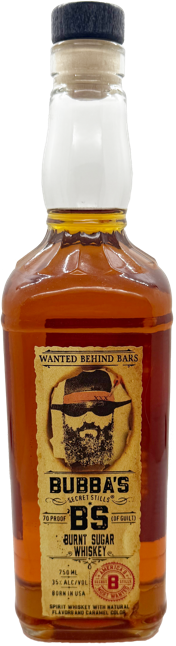
ABV 35%. ~20 for 750ml.
I asked for a brown sugar bourbon, and the associate handed me this and said that it was the only one that they had. I saw “BS” on the bottle and didn’t question it; however, as I was drinking it, I was thinking, “I’m not tasting any brown sugar at all… just a lot of caramel.” Now, caramel is essentially burnt sugar. So I looked more closely at the bottle. “Burnt sugar,” it said, not brown sugar.
And it is also not bourbon, but rather a spirit whiskey, which means that anywhere from 5% to 20% whiskey has been mixed with a neutral spirit… which is why it doesn’t taste like whiskey.
When all is said and done. Bubba’s BS does just what it says that it is going to do. You get a 30% ABV syrup that tastes like caramel. Folks who can drink pure syrup without complaint will like this, and clearly it would perform well as an ingredient; for example, I find that it goes well on vanilla ice cream… which I suppose is true of caramel itself, so that’s not a huge surprise.
Brown Sugar Bourbon (BSB) - Heritage Distillers

ABV 30%. ~$28 for 750ml.
This is what I was looking for when I asked for brown sugar bourbon. (I don’t have a picture of it from my own cabinet because I don’t have any right now.) Or the more recent 35% version. Or the 51.5% version. Since it was distilled in WA, it was not tough to find in OR. But it appears that Jamie Foxx bought it out, and it is now distilled elsewhere. I’ll let you know if I can get it in ME.
This stuff was great. Definite brown sugar and bourbon with a hint of cinnamon. Worked perfectly for updating the traditional holiday bourbon balls.
Sabra - Chocolate Orange Liqueur
(imported from Israel)
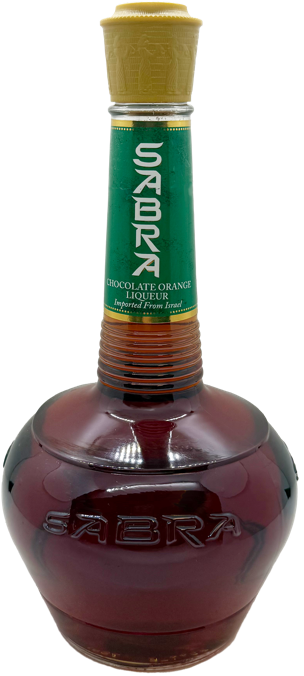
ABV 35%. ~20 for 750ml.
I am a huge fan of chocolate and orange. There was a mom-and-pop place in San Diego that sold an ice cream back in the late 80s that they called “sabra,” which is when I learned more about the Israeli use of the word. The “sabra” label has become so complex over time that I am not going to try to talk about it here (plus I have no real personal experience), but I do encourage you to go find out more about it on your own because it is pretty interesting.
The chocolate flavor in this liqueur is of the sort similar to Hershey’s syrup, which I would tend to call bittersweet.
The citrus flavor is from Jaffa oranges and kumquats. Way back in 1981, my college roommate (Paul Sloan) and I went to Safeway and encountered kumquats, which he had not had before. I told him that the law says that he can sample one, which he did, remarking squintily, “Does the law also say that I can spit one out?”
I only found this item recently, so I haven’t tried it often in experimental cocktails yet, but it is very nice in coffee (both with and without chocolate ice cream melted into it).
Disaronno (Originale)
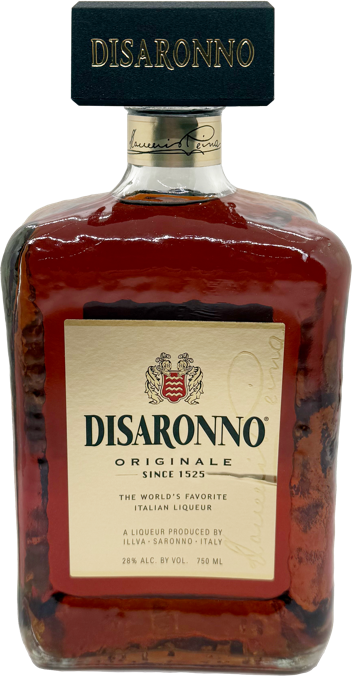
ABV 28%. ~30 for 750ml.
“Disaronno” means, simply enough, “from Saronno,” where it has been made since 1525.
Looks like I just missed the 500th anniversary, although production wasn’t a substantial business before the 1600s.
While the flavor and aroma are distinctly and unmistakably marzipan (to my memory), this liqueur is made from apricot kernel oil, burnt sugar (i.e., caramel notes), and then extracts from 17 fruits and herbs (maybe the likes of orange, vanilla, and cinnamon); in other words, Disaronno does not use any , sweet or otherwise. How does that work? Well, for the same reason that marzipan is cherry-ish…
Apricots and almonds are closely related (genus Prunus), and while apricot flesh is well familiar in US markets, folks here are much less used to eating the fruit flesh of green almonds because you need to wait for the almond seed/nut to mature before harvesting it, and by that time the outside has gotten unpleasantly dry and tough.
As an aside, my great-grandmother (my father’s mother’s mother) had extensive, commercial-scale almond and walnut orchards. We always had big bags of hulled nuts in our freezer at home.
Now, I happen to like marzipan, so for me this is a good flavor when I am experimenting with stuff.
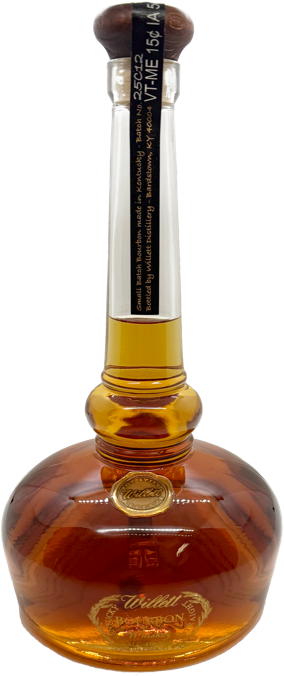
ABV 47%. ~50 for 750ml.
I am a sucker for an interesting bottle, which in this case is designed to have the shape of a Willett copper pot still of a very traditional, patented kind (i.e., it is not like the larger column stills).
I also like trying different kinds of bourbon, as I am more likely to enjoy them compared to other types of whiskey (and so on).
This is produced in small batches (as opposed to single barrels in the past); in this case, that batch is 25C12 (where C = May).
The oak flavor is readily apparent, with a low enough bandaid signature that I am not put off. After an initial burn there is no more pain than water, and the viscosity is similarly low.
I tried various ways to disguise the remaining bandaid-ness, finding tha: (a) blue curaçao (by Bols) added only sweetness (i.e., no orange); (b) Cointreau added both sweetness and orange, but no substantial masking. and (c) H&S Coastal Cranberry was sweet and a bit dry (like cranberries, no surprise), but did not cover the bandaidiness.
So I’ll try other combos later.
Willett Kentucky Straight Bourbon Whiskey
Pot Still Reserve
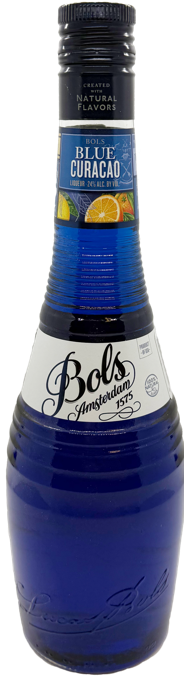
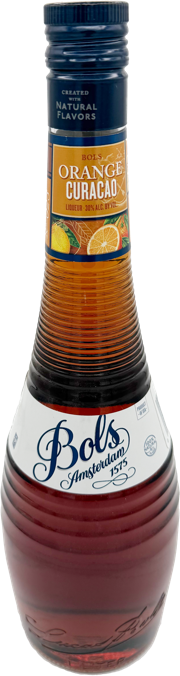
Blue: ABV 24%. ~20 (or less) for 750ml.
Caramel (colored, not flavored): ABV 30%. ~15 for 1L
Spanish Valencia oranges came to be Laraha oranges on the Caribbean island of Curaçao (possibly brought there to combat scurvy), becoming so bitter (over time in that climate) that eating them evidently became unpleasant; however, the zest is used in the liqueur. The fruit is peeled with wooden knives to keep the flavor unaffected, and the peels are dried in the sun.
I find the flavor to be pretty mild compared to other orange spirits.
Bols in particular is not just Laraha, but other types of orange as well, plus some spices (e.g., vanilla, grains of paradise, and cardamom), and there is a molasses type of base (which would be more like rum).
The blue color is just marketing to make it seem more “tropical,” and I use it to make a typical Blue Hawaiian.
Personally, I prefer Cointreau when experimenting because it has a neutral spirit base, and is stronger and not as sweet (or I like something like Grand Mariner in a “Cadillac” margarita where its Cognac base is buried).
To me, the blue and caramel-colored versions of the Bols products vary in taste and texture, with the blue being more watery and mild, and the other being more syrupy and strong. I use the blue to make the purple version of the For Goodness’ Sake cocktail.
I only bought the caramel-colored one because I came across it by happenstance and didn’t realize that Curaçao was also not-blue.
Bols Blue Curaçao
H&S Coastal Cranberry

ABV 21%. ~30 (or less) for 375ml (i.e., ~60 for 750ml)
H&S Spirits is local to my new home, and they produce a wide variety of liqueurs. (I am new to the area, so I am still working my way through their repertoire.) The picture on this site shows a mostly empty bottle because I have been working on this one for about four months, and not on my own.
Naturally, this liqueur is made from cranberries indigenous to the bogs around here.
So far, I’ve only had it to sip in a shot glass, which is very nice, and to try to cover the bandaidinss of a bourbon, which was not effective.
H&S Wild Blueberry

ABV 21%. ~30 (or less) for 375ml (i.e., ~60 for 750ml)
This is a companion to the cranberry liqueur described above, produced by H&S Spirits; similarly, the picture shows a mostly empty bottle, and so far I (and others) have mostly just sipped it in a shot glass like a cordial.
I’m sure that I’ll have more to say later.
Toki
Whisky by Suntory
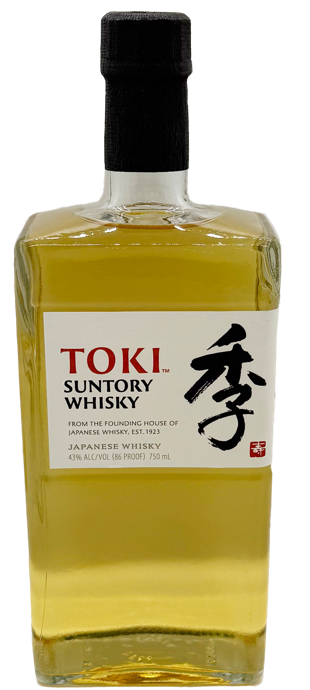
ABV 43%. ~30 for 750ml
Suntory is a that I encourage you to research in more detail (as presenting a summary here would be inadequate). In the immediate context, Suntory just needs to be identified as the distiller for which Toki (meaning “time”) is the entry level, blended whisky specifically designed for straight consumption (i.e., not for savoring and sipping) in something as simple as a highball (i.e., cut by half or thirds with water, usually over ice). The notion — which evidently worked — is to persuade consumers that a highball can be a conventional accompaniment to a meal.
As you might expect, then, Toki has little in the way of burn or bandaid. The flavor has some citrus to it (along with the oak vanilla thing going on), and the bite (such as it is) might with some imagination be described as ginger and/or pepper. I was expecting that such flavors would disappear when watered down, which did happen, but it turned out that their loss seriously accentuated the bandaid. Must be something about that phenol that resists being diluted so that taste (and the consequent, unpleasant shudder) gets left behind when the more fragile flavors are drowned out by the water.
On the basis of this experience, I determined to track down some Hazelburn 10yo whiskey, which is supposed to have 0 ppm of the phenol that I do not like. We’ll see what happens. Should be here in a couple of weeks.
Amarula
Cream Liqueur
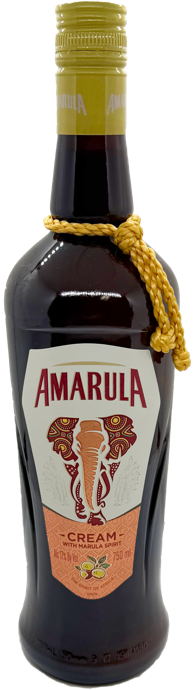
ABV 17%. ~25 for 750ml (refrigerate after opening, consume within 6 months)
Marula is a fruit that grows in various places around Africa and Madagascar, and it acts as the basis for this liqueur. It is produced in South Africa in specific, and as far as I can tell, this product is not shadowed by an apartheid history.
So, in the world of cream liqueurs, such as in comparison to Five Farms and Bailey’s, does Amarula tend to taste more like fruit? Well, yes. There is something sort of like citrus about it, but there is also a hefty dose of marshmallow. It mixes wonderfully with Cointreau, other creams, chocolate vibers (like Sabra or hot chocolate), and basically anything else where we might use cream… like over strawberries.
There are a number of different varieties as well: (a) Ethiopian coffee (with a red cord); (b) vanilla spice (namely Madagascar vanilla and Nigerian ginger, with an orange cord); (c) a vegan version (with coconut milk and a fuchsia cord); (d) chocolate (with a purple cord); and then (e) a blend of raspberry, chocolate, and African baobab (with a pink cord).
I have had them all (because I tend to get into an exhaustive collection mode), and each is well worth trying.
And yes, there are also chocolates.
I should have kept better notes along the way; however, I do remember mixing the original with applejack, which was great, and I would add it to coffee on occasion, as well as Kalhua and orange (like a non-layered variation of a B52). Sometimes brown sugar bourbon would figure in. It is really hard to go wrong… as long as you’re in the mood for velvety sweetness.
Single Batch Irish Cream Liqueur
Five Farms
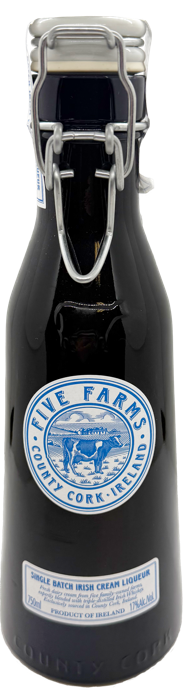
ABV 17%. ~30 for 750ml (refrigerate after opening, consume within 6 months)
There are five family farms in County Cork, Ireland, providing the cream for this liqueur which, to my individual tastes, is much better than Bailey’s… and I already like Bailey’s. Whiskey makes up 10% of this product (and 70% cream, plus beet sugar, vanilla, and caramel), compared to only 1% in the more typical kinds, where they bring up the ABV with a scud of neutral spirits (ethanol).
Bailey’s also has cocoa in it, which I don’t necessarily need in the beverage itself as I can always add some to taste.
“Sayuri” Junmai Nigori Sake ("Little Lily")
Hakutsuru Brewery
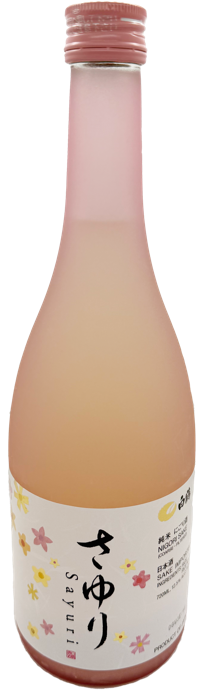
ABV 12.5%. ~20 for 750ml (serve chilled)
As junmai nigiri, this sake has a beautiful, cloudy, relatively raw rice-y flavor that comes across in a very creamy, floral way (maybe cherry blossom?) with a memory of berries/fruit and white grapes (almost like a vanilla moscato).
That’s the good news.
The bad news is that if you’ve ever smelled Arm & Hammer “Slide” cat litter, the aroma similarity is unmistakable and might make this sake very difficult for you to find pleasant, which is a damn shame.
So, yeah, just be aware of the risks when you go shopping for cat litter.
There is in fact a little known difference between “allmonds” and “æ-monds,” namely:
They are “almonds” until they fall off the tree, because when they hit the ground it knocks the ‘ell out of ‘em.
(I am unapologetic.)
On the list:
- Byrrh
- absinthes
- orange bitters (Fee Brothers and Regan’s)